
Mugdock to Carbeth Loch and back
Date: 18 February 2024
Leader: Idris
Grade: C+
Number on walk: 18
Length 12.5km. Ascent 240m.
Hills climbed:None
Click here for GPX track of the walk
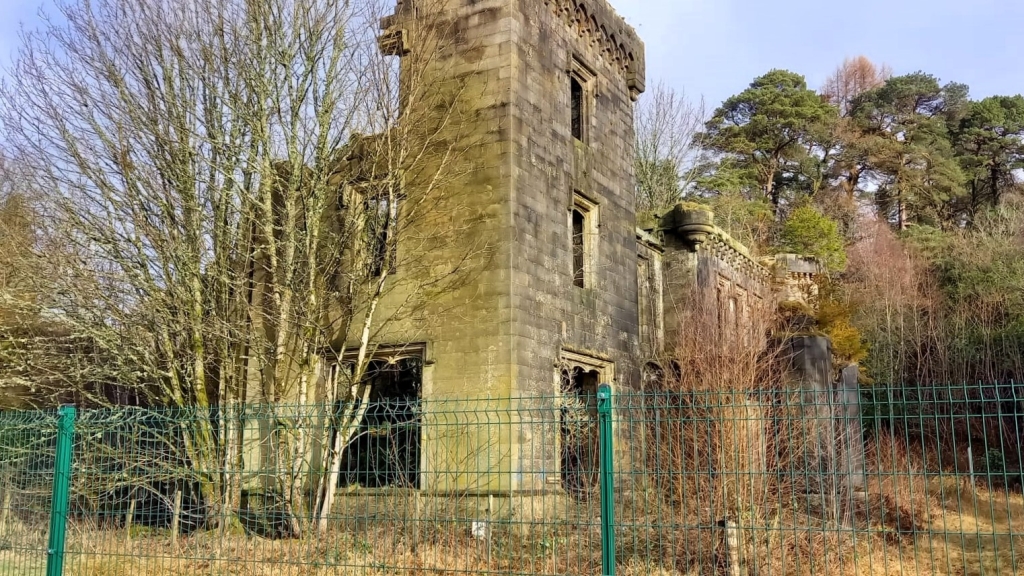
The ruins of Craigend Castle
This stately home was built in Regency Gothic style in 1816 for James Smith. It had several owners including Sir Harold Yarrow son of the founder of Yarrows Shipyard. Sir Harold Yarrow left the house in 1947. Three of the opulent public rooms were then used for lunch, afternoon tea and light snacks byvisitors to Craigend Zoo. The building fell into disuse in the 1950s and 1960s when the roof was removed to avoid tax.
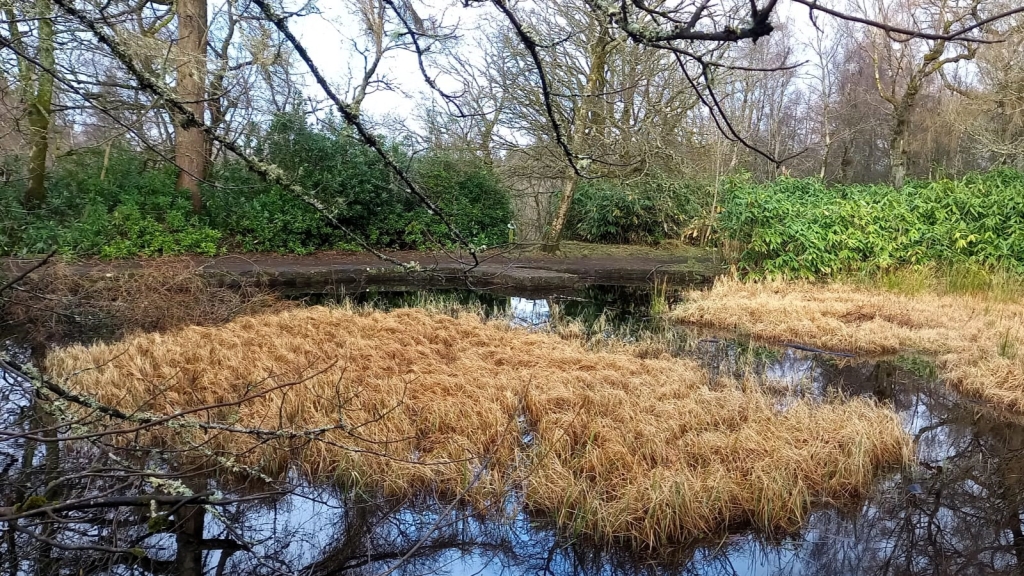
The ornamental lily pond on Gallows Hill
This pond replaced a much smaller 17th century pond used as a “drowning pond” where convicted female felons were put to death. Drowning, at the time, being the accepted form of capital punishment for women. Men were hanged on the adjacent Gallows Hill.
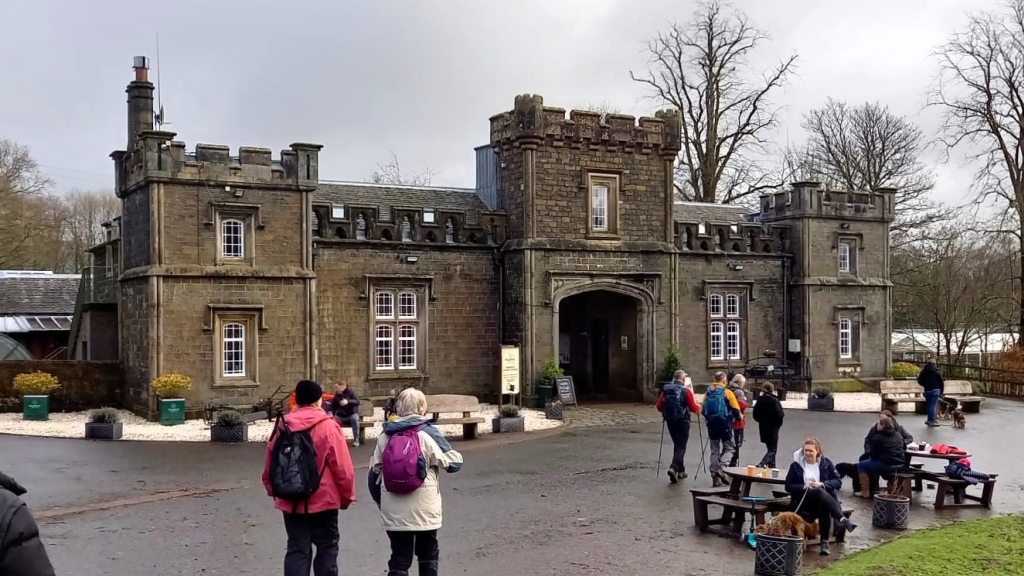
The Mugdock Country Park Visitors’ Centre
This building, now houses a tea room and various gift shops, but was originally the Craigend Castle stables and was built at the same time (1816). This is where the Estate’s horses, coachmen, grooms and carriages were housed. Behind the Stables was an open area with a glass roof where the Estate coaches and carriages were washed. There was also a storeroom for farm tools, a boiler-room used for the preparation of animal feed and a byre with a semi-circular bull-pen attached.
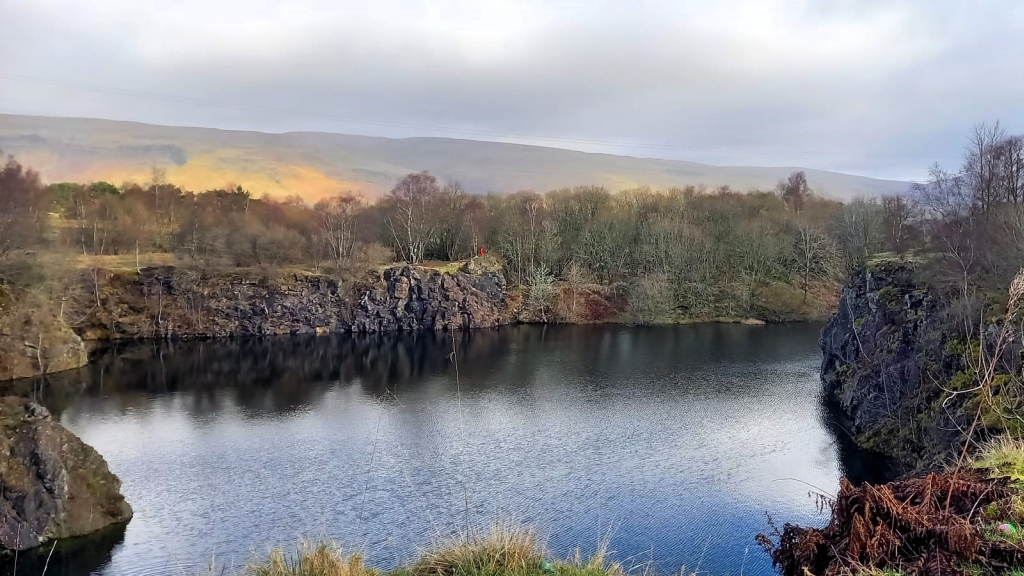
After leaving the Visitors’ Centre we passed the now abandoned Craigend Quarry

Our morning break was taken outside Mugdock Castle
Two towers and a curtain wall are all that remain of the 14th century castle as a “large castellated mansion” was built within the ruins of the castle. This mansion itself became derelict after being used by the MoD during WWII and was demolished.
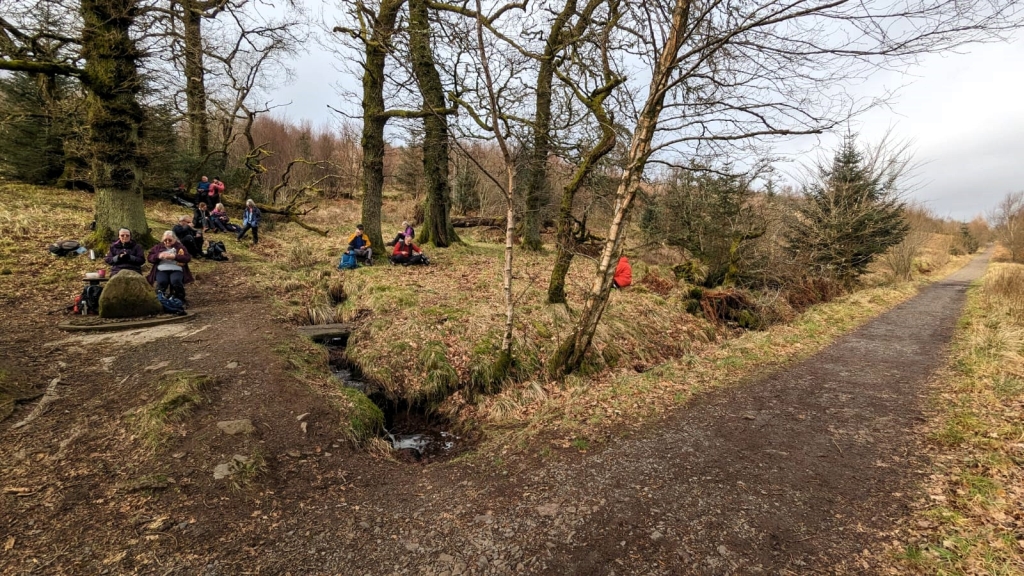
We had our lunch break at the site of the Craigallian Fire Memorial
The inscription on the memorial says it all:- Here burned the Craigallian Fire. During the Depression of the 1930s, it was a beacon of companionship and hope for young unemployed people who came from Glasgow and Clydebank seeking adventure in Scotland’s wild places. Their pioneering spirit helped to make the Scottish countryside free for all to roam.
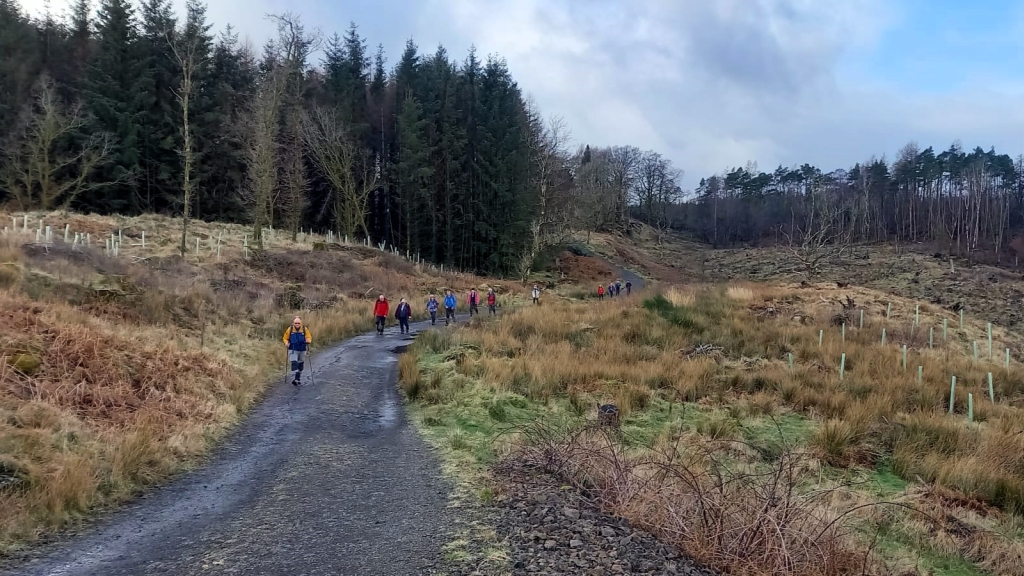
On our way back towards Mugdock after passing Boards on the Cuilt Brae
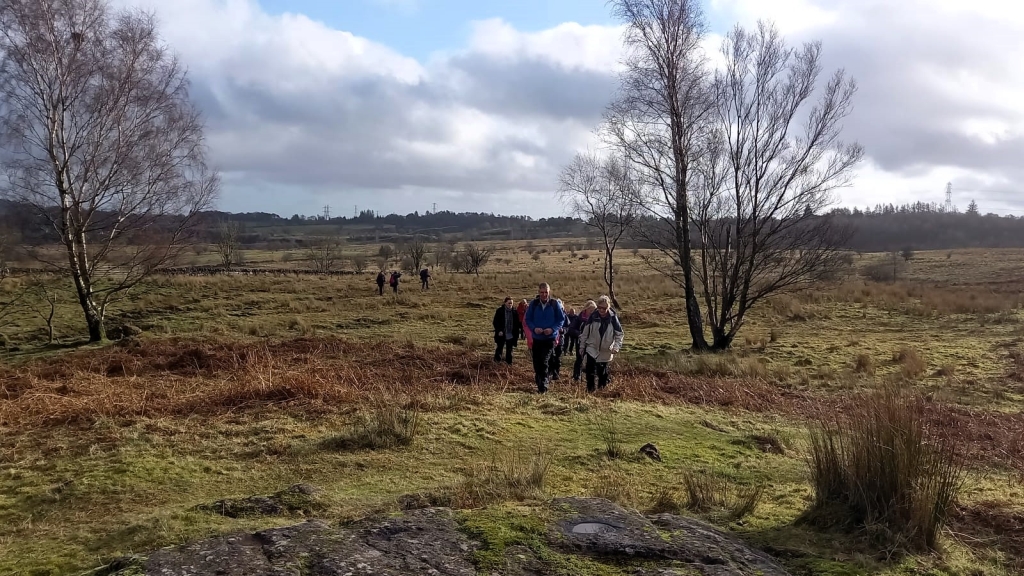
Crossing Dumbrock Muir and approaching our final viewpoint of the day which gave us a fine view of Dumgoyne and Dumfoyn