
Stronend and Fintry Crags
Date: 05 July 2026
Leader: Jack
Grade: B
Number on walk: 16.
Length: 12.2 km. Ascent: 490 m.
Hills climbed: Stronend.
Click here for GPX track of the walk
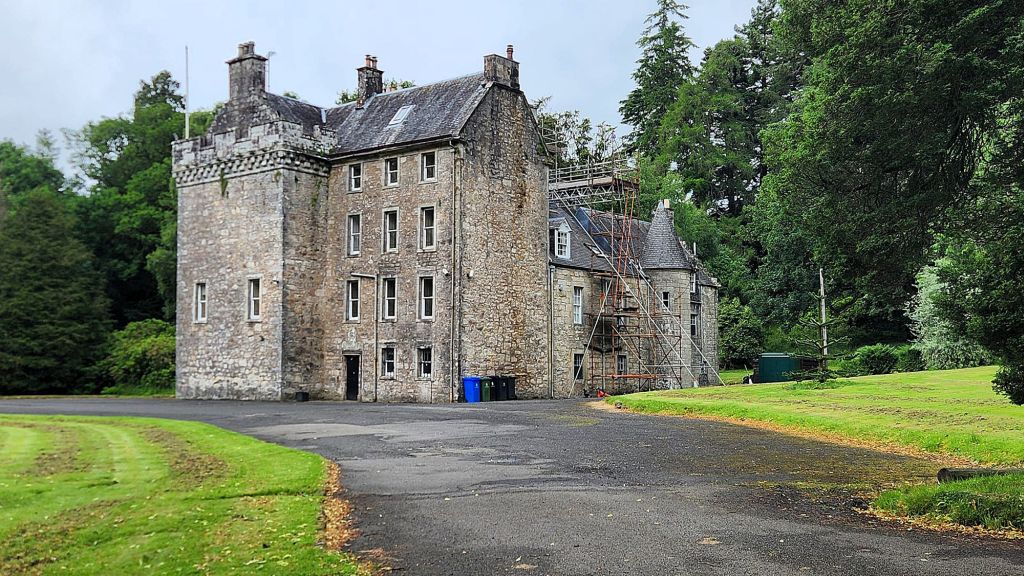
Soon after setting off we passed Culcreuch Castle
Culcreuch Castle is an altered 15th-century, three-storey tower house built for the Galbraiths. It served as the Galbraith clan seat until 1624. After a long and varied history, the castle was sold in 2007 and operated as a hotel until 2020, when it was acquired by an American holding company. Since its acquisition in 2020, there has been no visible redevelopment. The building appears to be privately maintained, with no active commercial or public use. The castle is known for having Britain’s largest bat colony, above the dining hall, as well as several reported ghosts.

Leaving the castle behind we were soon climbing out of the River Endrick valley
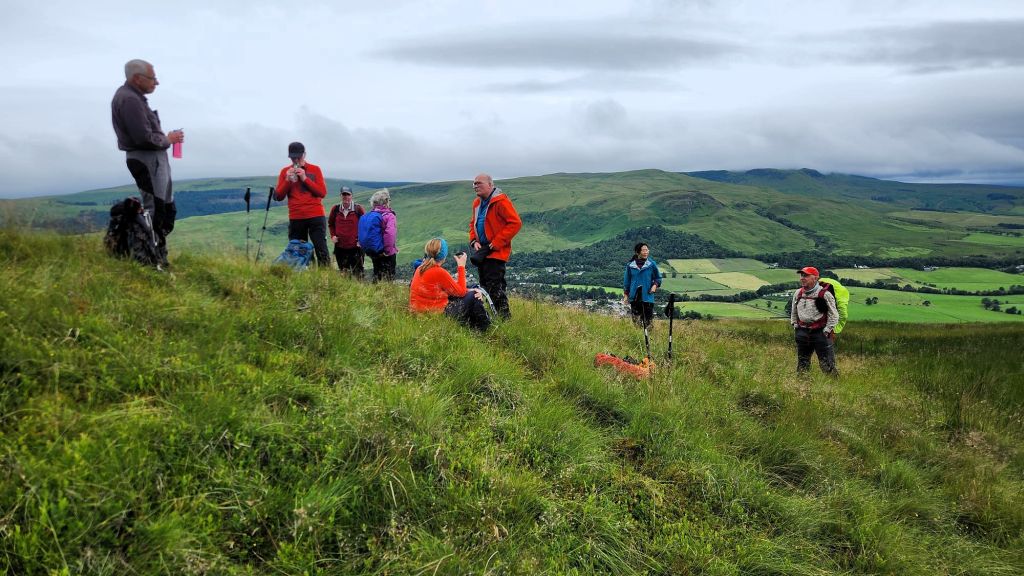
The successive lava flows forming the Fintry Hills formed a series of giant ‘steps’. We had our morning break after ascending the second of these ‘steps’
The Fintry Hills belong to the Early Carboniferous Clyde Plateau Volcanic Formation, a vast ancient lava field that once extended across much of the Glasgow area, the Campsies, the Fintry Hills, and the Gargunnock and Touch escarpments. Formed around 340 million years ago, it was created not by a single large volcano but by repeated eruptions from many smaller ones. These eruptions laid down successive layers of basaltic lava, eventually building a broad, flat volcanic plateau hundreds of metres thick. The stepped cliffs of Stronend mark the edges of those lava flows, with each terrace representing a separate flow.

As we approached the last lava flow, we entered the cloud
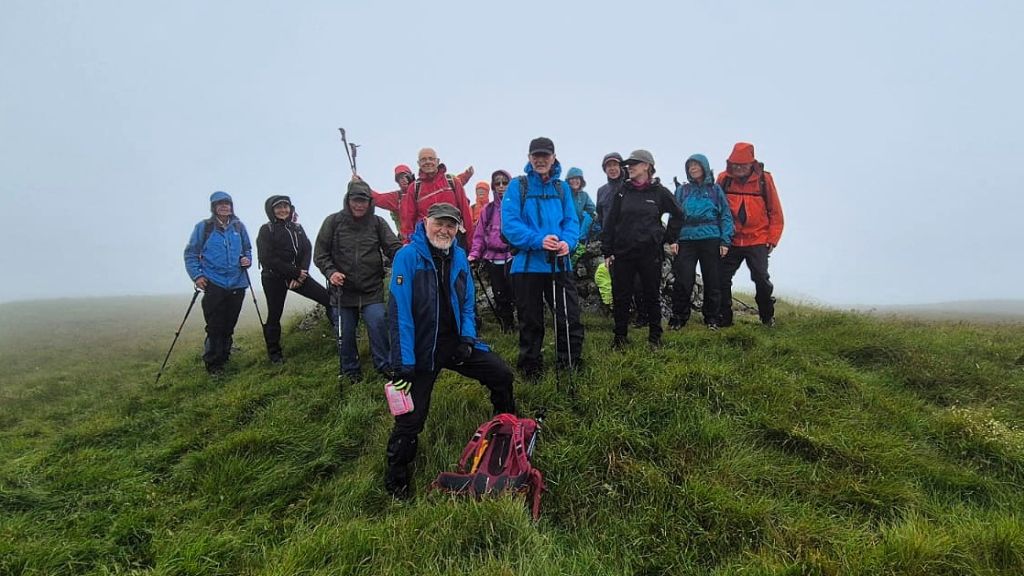
Soon after surmounting the last lava flow, we reached the summit and endured the cold, wet, weather conditions at the summit cairn
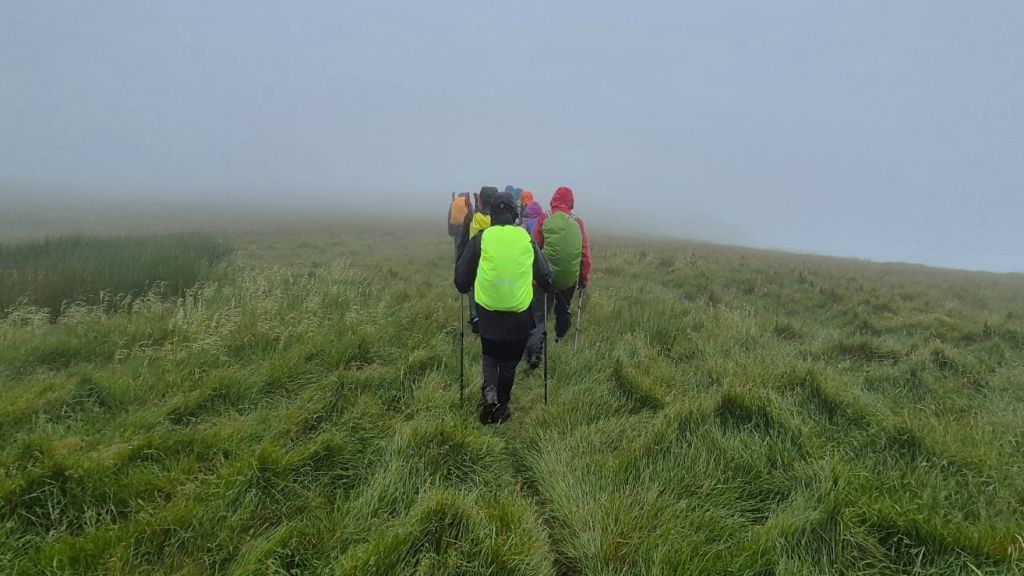
The cloud we entered after passing the 350 m contour stayed with us as we traversed the summit ridge
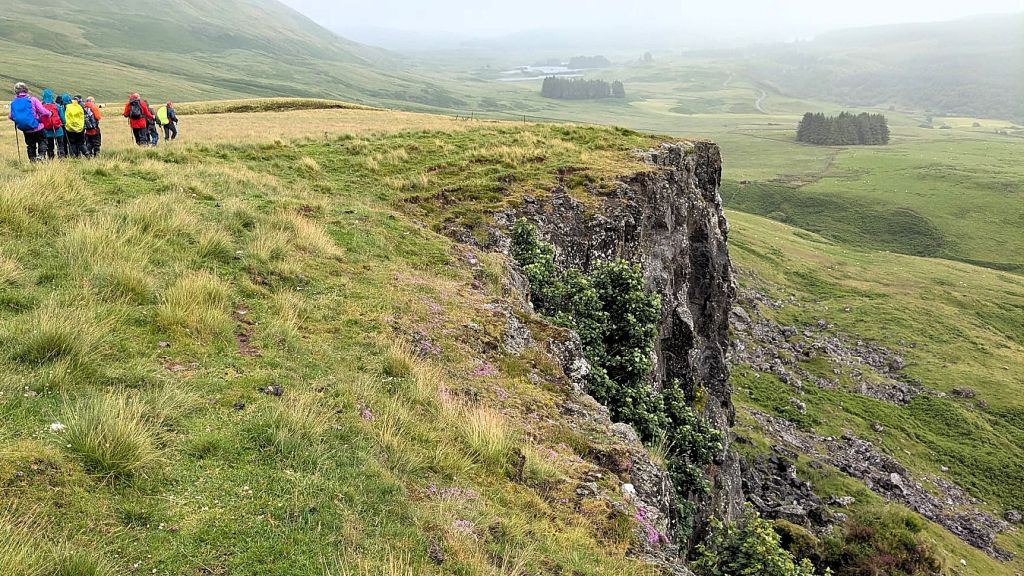
As we descended from the ridge, the view appeared, revealing the crags and Loch Walton
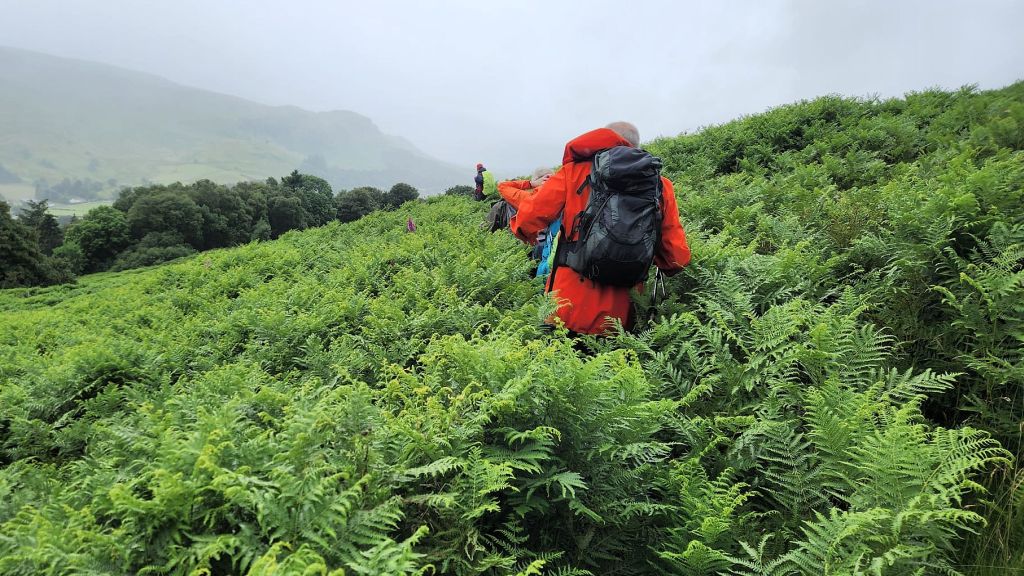
Finally our path took us through a luxuriant growth of bracken at the foot of the crags