
Complete Falls of Clyde Circuit
Date: 27 July 2025
Leader: Gerry
Grade: C+
Number on walk: 11
Length 10.7 km. Ascent 305 m.
Hills climbed: None.
Click here for GPX track of the walk
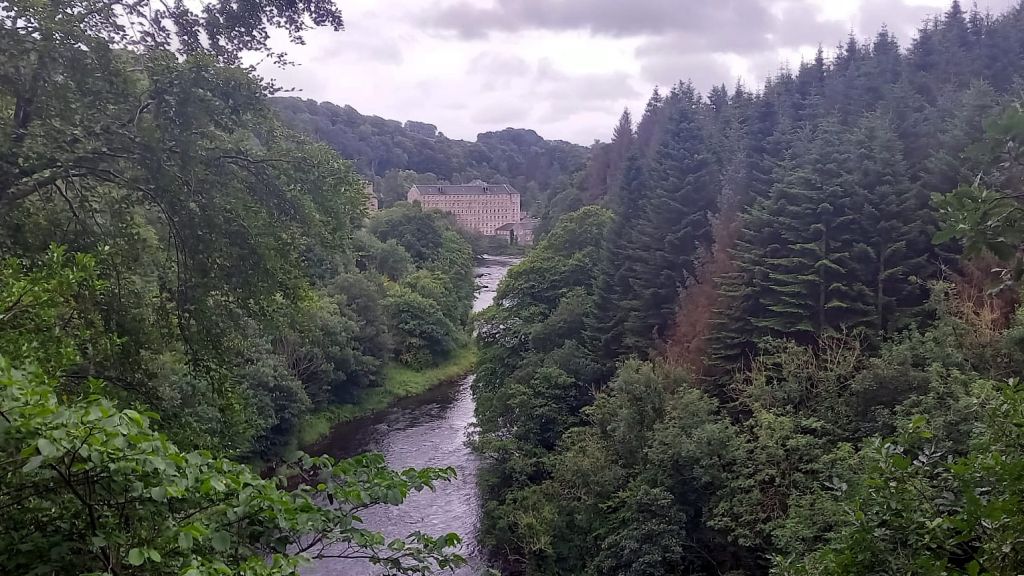
Initially we headed north along the east bank of the river Clyde with occasional views of the restored New Lanark mills through the trees.
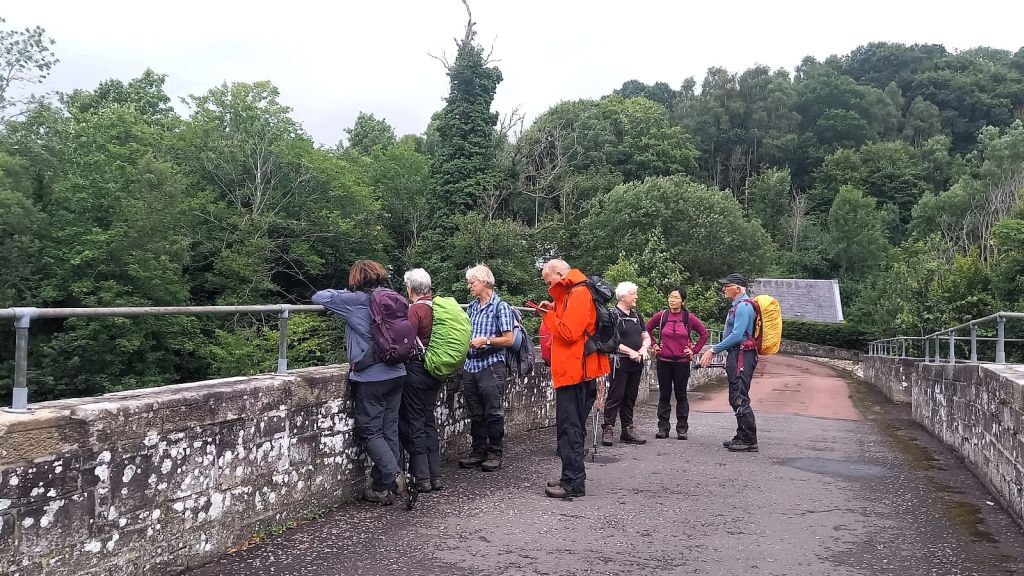
Crossing the River Clyde on the 17th century bridge at Kirkfieldbank
Completed in 1699 and superseded in 1959 by the adjacent Kirkfieldbank bridge and now a pedestrian bridge
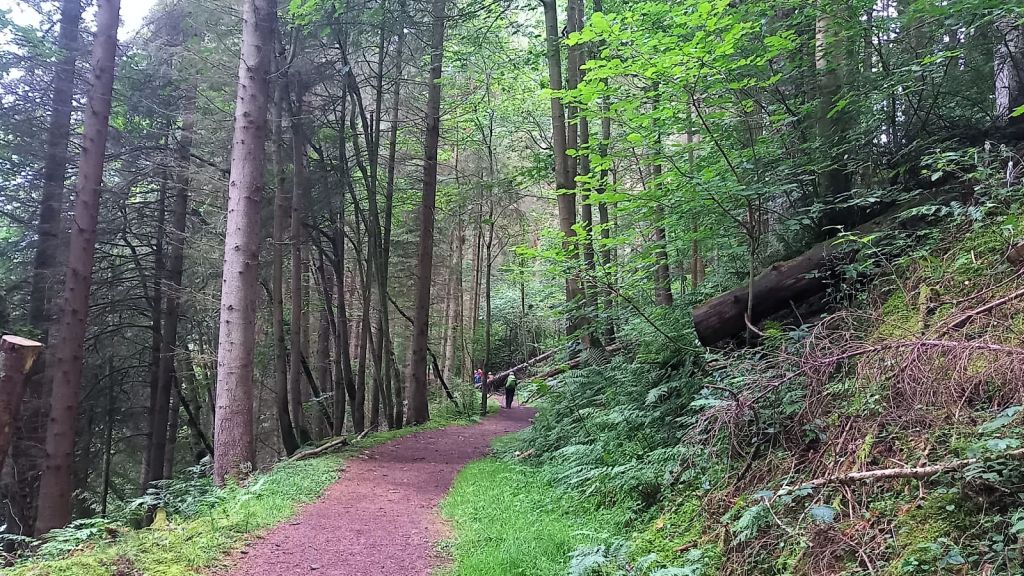
Walking through the woodland on the west bank of the River Clyde near Corra Linn
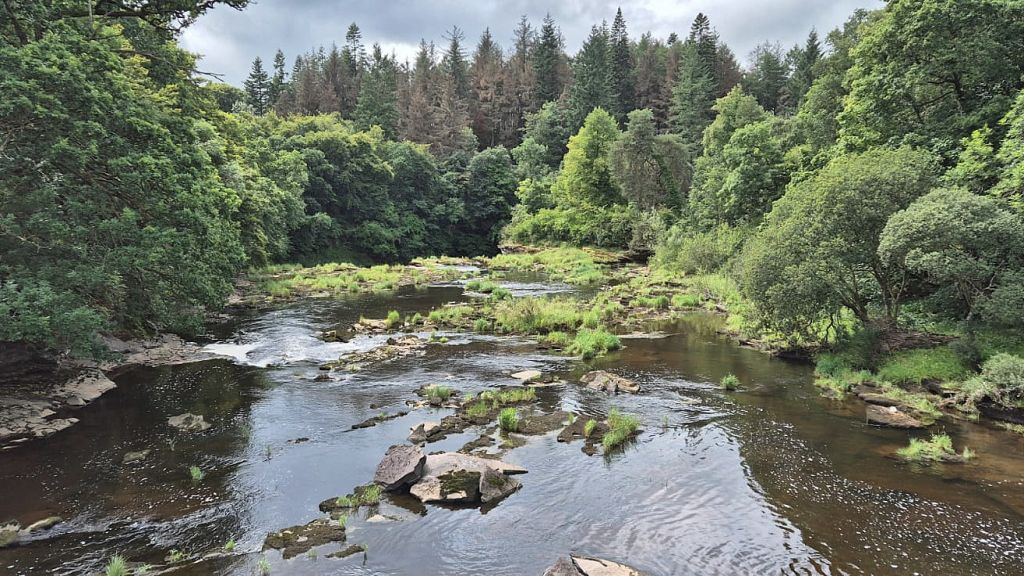
We crossed the River Clyde again above Bonnington Linn
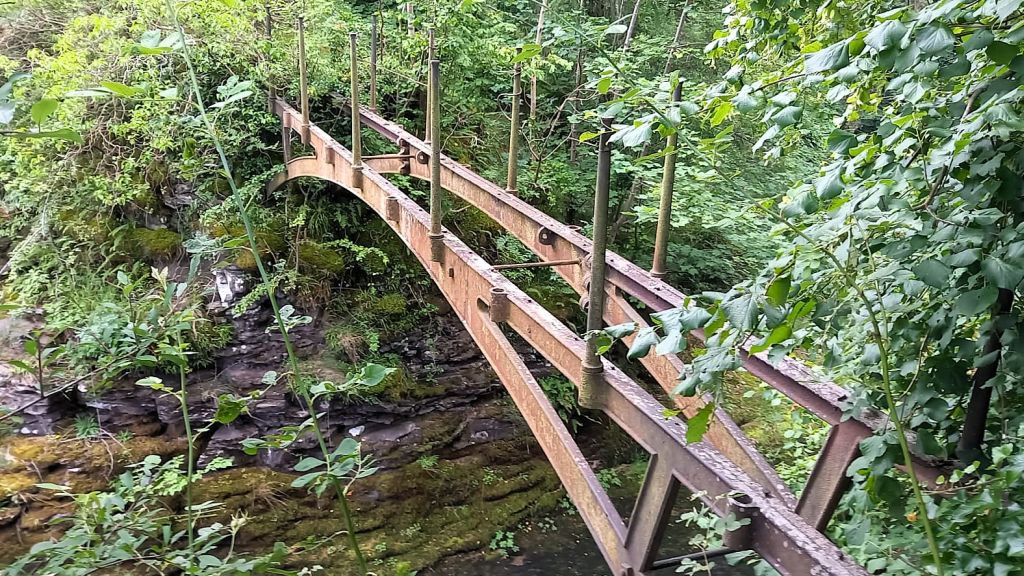
The rusty remains of a footbridge linking the east bank of the River Clyde to a small rocky island overlooking Bonnington Linn
Built in 1829 and now one of the oldest surviving cast iron footbridges in Scotland. Commissioned as part of a scheme to enhance the Bonnington Estate into a picturesque destination between 1800 and 1830. The bridge led to a doocot which had been transformed into a thatched temple or summerhouse sometimes called a “fog house” as it was lined with moss
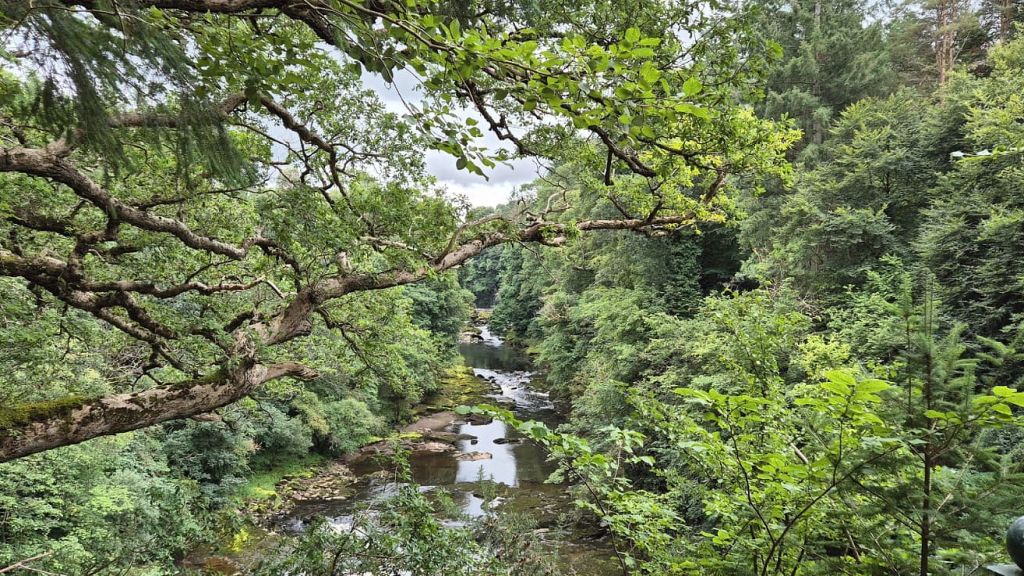
Looking towards Bonnington Linn from the east bank of the River Clyde
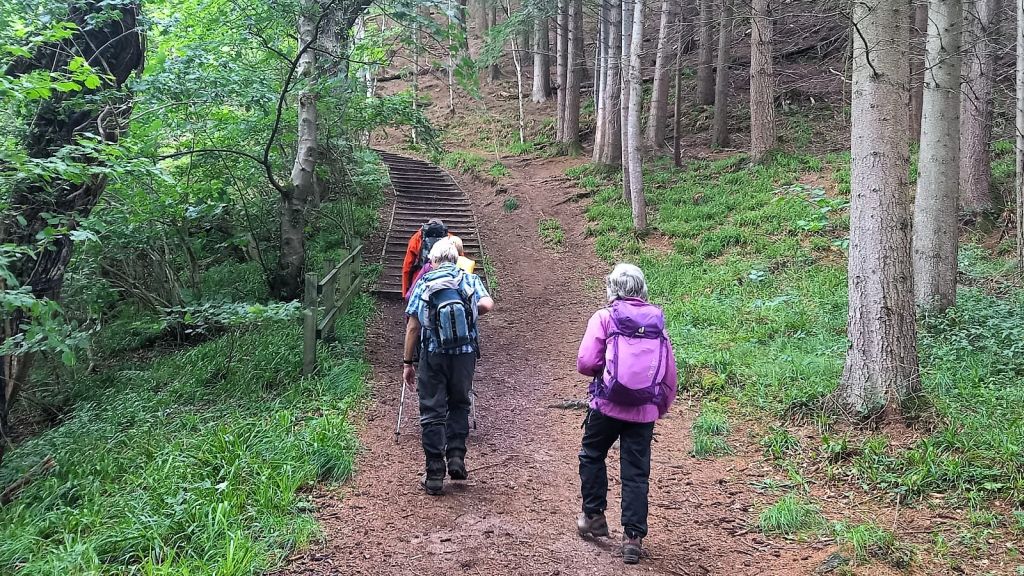
Approaching Bonnington Power Station
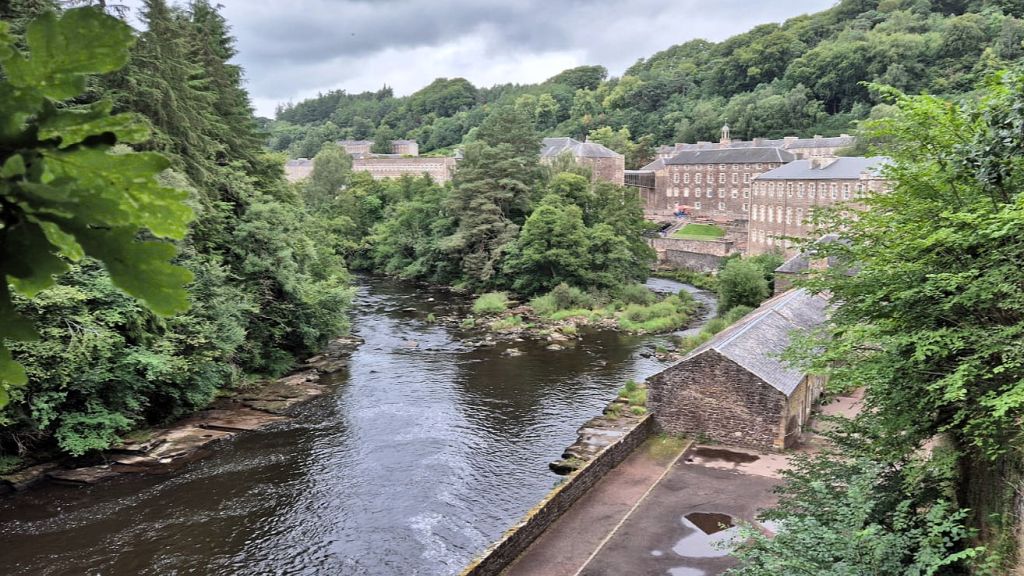
Returning to the mills at New Lanark at the end of our walk
Founded in 1785 by David Dale, in partnership with inventor Richard Arkwright, to harness waterpower from the Falls of Clyde for cotton spinning. They became internationally renowned under Robert Owen, Dale’s son-in-law, who managed the mills from 1800 and pioneered progressive social reforms. Owen introduced education, healthcare, and fair working conditions, making New Lanark a model industrial community. Established the first infants’ school in Britain in 1817, and the Institute for the Formation of Character to promote moral and intellectual development. The mills were part of a planned settlement, with housing, schools, and amenities for workers — a precursor to modern urban planning. Operated until 1968, then fell into decline before being restored by the New Lanark Trust from the 1970s onward.